
Aesthetic Fillings Guide: Composite Bonding, Benefits & Cost Factors

What Are Aesthetic Fillings?
Aesthetic fillings are tooth-colored composite resin restorations that treat decay, repair chips and close small gaps in a single visit - with no metal, no visible grey edges and little or no drilling of healthy enamel. In Side, each case is quoted in writing from your photos before you book.
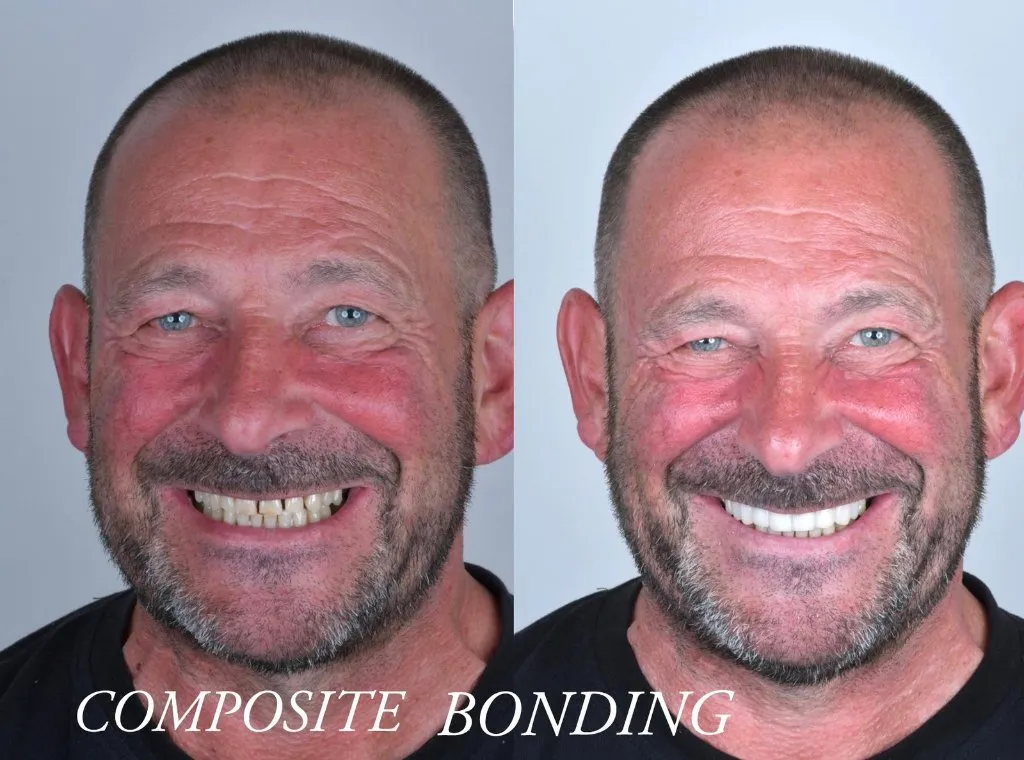
Unlike old amalgam (metal) fillings, aesthetic composite fillings are matched to the exact shade of your natural tooth. The resin bonds chemically to the enamel, which means the dentist can preserve far more healthy tooth structure than with traditional silver fillings. The same material and technique - often called composite bonding - is also used purely cosmetically, to reshape worn edges or fill the small gap between front teeth.
This guide explains what aesthetic fillings can (and cannot) do, how the procedure works step by step, what healing and aftercare look like, who is a good candidate, and what you can expect to pay in Turkey compared with the UK and Germany. You can check current treatment fees at any time on our price list.
What Can Aesthetic Fillings Treat?
- Cavity treatment: the decayed tissue is removed and the cavity is filled with tooth-colored composite, leaving no visible trace of the repair
- Fracture and chip repair: broken corners and edges after trauma are rebuilt layer by layer
- Diastema closure: small gaps between front teeth are closed without braces or veneers
- Shape correction: asymmetric, short or unusually small teeth are enlarged and harmonised with the smile line
- Amalgam replacement: old metal fillings are swapped for natural-looking composite
- Wear repair: edges flattened by bruxism (night grinding) are restored to their original length
Composite Bonding vs Porcelain Veneers
Patients often ask whether bonding or a veneer is the better choice for a front tooth. Both can deliver an excellent result, but they solve slightly different problems. Bonding is faster, cheaper and completely reversible; porcelain veneers last longer and resist staining far better.
| Feature | Composite Bonding | Porcelain Veneer |
|---|---|---|
| Treatment time | Single session | 5‑7 days |
| Cost | More affordable | Higher |
| Durability | 5‑7 years | 10‑15 years |
| Tooth preparation | None or minimal | Minimal |
| Stain resistance | Moderate | Very high |
A practical rule of thumb: for one or two small corrections, bonding is usually the smarter first step. For a full smile transformation involving six or more front teeth, veneers or crowns generally give a more predictable long-term result.
Why Patients Choose Composite Over Amalgam
Amalgam served dentistry well for over a century, but modern composite has overtaken it in almost every respect that matters to patients. The advantages go well beyond looks:
- Invisible repair: the shade-matched resin disappears into the tooth, while amalgam darkens over time and can show through thin enamel as a grey shadow
- More tooth preserved: amalgam needs mechanical undercuts to stay in place, so healthy tissue must be drilled away; composite bonds chemically and only the damaged tissue is removed
- No metal, no mercury: composite contains no metal alloys, which also rules out the galvanic sensitivity some patients notice with dissimilar metals in the mouth
- Less thermal stress: metal expands and contracts with hot and cold far more than composite, which over the years can cause hairline cracks in the surrounding tooth
- Repairable: a chipped composite can usually be patched in minutes, while a failed amalgam must be drilled out entirely
The honest trade-off: composite is more technique-sensitive and slightly less durable on heavily loaded molar surfaces - which is exactly why skilled application and a correct bite adjustment matter so much.
The Procedure Step by Step
An aesthetic filling normally takes 30‑60 minutes per tooth and is completed in one appointment.
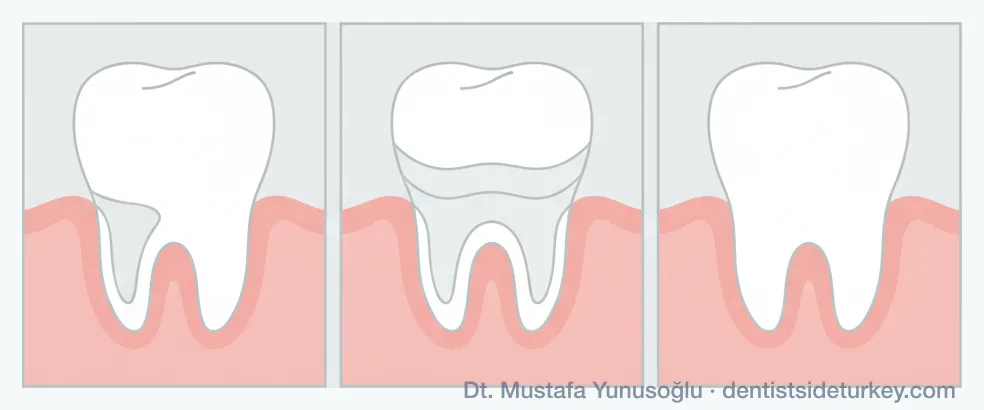
- Examination and shade selection - the dentist checks the tooth (with an X-ray if decay is suspected) and selects a composite shade that matches your natural enamel under daylight-balanced lighting.
- Anaesthesia if needed - for cavity treatment a small amount of local anaesthetic keeps the visit virtually painless; purely cosmetic bonding on an intact tooth often needs no injection at all.
- Cleaning and preparation - decayed or damaged tissue is removed. The surface is then etched with a mild gel for a few seconds to create a microscopically rough surface the resin can grip.
- Bonding agent - a thin adhesive layer is painted on and light-cured, forming the chemical bridge between tooth and composite.
- Layering - the composite resin is applied in thin layers, each one sculpted and hardened with a blue LED curing light for 10‑20 seconds. Layering lets the dentist copy the natural translucency of enamel.
- Bite check, shaping and polishing - the dentist checks your bite with articulating paper, refines the anatomy, and polishes the surface to a high gloss so it feels and reflects light like a natural tooth.
Healing and Aftercare Timeline
First 24‑48 hours
- The filling is fully hardened the moment you leave the chair - you can eat as soon as any anaesthetic numbness wears off (usually 1‑3 hours).
- Mild sensitivity to cold or pressure is normal after deep cavity treatment and settles within a few days.
- Avoid strongly staining food and drink - coffee, red wine, tea, turmeric - for the first 48 hours while the polished surface stabilises.
First week
- If the filling feels slightly "high" when you bite, contact the clinic; a 2-minute adjustment fixes it.
- Brush and floss normally - composite does not need special products.
Long term
- Brush twice daily with a non-abrasive toothpaste and clean between teeth once a day.
- Attend a check-up every 6 months.
- Have the composite professionally re-polished about once a year to refresh its gloss and remove surface stains.
- If you grind your teeth at night, wear the night guard your dentist recommends - bruxism is the main cause of early composite wear.
With this routine a well-placed aesthetic filling typically lasts 5‑7 years, and small repairs can often be done without replacing the whole restoration.
Who Is a Good Candidate?
Aesthetic fillings suit almost every adult patient, but they work best when:
- the defect is small to medium sized - large cavities on molars may be better served by a crown or inlay
- gums are healthy and any active gum disease has been treated first
- your bite does not put extreme force on the repaired edge (heavy grinders need a night guard)
- you want a minimally invasive, reversible option before committing to veneers or crowns
If you are planning whitening, do it first: composite does not bleach, so the filling shade is matched to your final tooth colour. Many patients combine an aesthetic filling appointment with professional teeth whitening during the same trip.
Limitations and Realistic Expectations
Aesthetic fillings are versatile, but no honest guide should skip their limits. Composite gradually absorbs pigments, so heavy coffee, tea or tobacco use will dull the surface faster than porcelain would - an annual polish restores most of the gloss, but a smoker's bonding will never stay as bright as a veneer. On large chewing surfaces the material wears measurably over the years, and a filling that replaces more than about half of the visible crown is structurally weaker than a lab-made restoration; in those cases your dentist may recommend an inlay or a crown instead.
Very large colour changes are also beyond bonding: composite can brighten a single dark spot, but it cannot lighten a whole smile the way whitening or veneers can. Finally, the result depends heavily on the operator - shade layering, moisture control and polish quality are craft skills, which is why before-and-after photos and patient reviews are worth checking before you book anywhere. When the case is chosen well and the technique is right, however, patient satisfaction with aesthetic fillings is consistently among the highest of any dental treatment.
What Decides the Cost of Aesthetic Fillings
We do not publish a price list. The amount in your plan depends on how many teeth are treated, the size and depth of each cavity, whether old amalgam fillings are being replaced, and whether bonding is also used to change shape or close a gap. The composites are the same Swiss and German brands used across Europe.
Most international patients combine fillings with other treatment in one visit: porcelain veneers, zirconia crowns, professional whitening or implants are planned together in one written plan, delivered within 24 hours of your photos. Crowns and veneers carry a 5-year written guarantee and implants a 10-year guarantee. Our page on how we quote explains the process.
How Many Days Do You Need in Turkey?
Aesthetic fillings are among the fastest dental treatments to plan around a holiday. One to four fillings are completed in a single appointment, so in theory one day is enough. We recommend planning 2‑3 days in Side: day one for examination, X-rays and the fillings themselves, and a short follow-up visit a day or two later for a final bite check and polish before you fly home. That still leaves plenty of beach time - which is exactly why so many patients fold treatment into a package trip. Read more about how appointments, transfers and accommodation are organised on our dental tourism page.
The day count for every treatment, side by side, is on our how many days do you need in Side for dental treatment page.
Two common reasons people ask about bonding have their own guides: a gap between the front teeth and a chipped or broken front tooth.
Get Your Written Treatment Plan
Dt. Mustafa Yunusoğlu has been treating international patients in Side since 2015, and the clinic holds a 5.0-star rating from 63 Google reviews. Send us a photo of your teeth via WhatsApp at +90 530 575 47 18 for an assessment, or contact the clinic to reserve your appointment - Monday to Saturday, 09:00‑19:00.
Frequently Asked Questions
How long does an aesthetic filling last?
A well-placed composite filling typically lasts 5‑7 years, and often longer with good care. Brushing twice daily, six-monthly check-ups, an annual re-polish and a night guard for grinders all extend its lifespan considerably.
Does getting an aesthetic filling hurt?
Cavity treatment is virtually painless under local anaesthetic. Purely cosmetic bonding on an intact tooth usually needs no injection at all. Mild cold sensitivity for a few days afterwards is normal.
How much does an aesthetic filling cost in Turkey?
We quote fillings per case rather than from a list, using the same European composite brands used across Europe. Your exact price depends on how many teeth are involved and the size of each cavity.
Can I eat straight after an aesthetic filling?
Yes. The composite is fully hardened with an LED light during the appointment, so you can eat as soon as any anaesthetic numbness wears off. Just avoid strongly staining food and drink for the first 48 hours.
Will the filling be visible when I smile?
No. The composite shade is matched to your natural enamel and layered to copy its translucency, then polished to a high gloss. Once finished, an aesthetic filling is virtually indistinguishable from the surrounding tooth.
How many days should I stay in Side for fillings?
One to four fillings are completed in a single visit, but we recommend 2‑3 days: treatment on day one and a short follow-up for a final bite check and polish before you fly home.