
Smile Design: What Is DSD Technology & How Does It Transform Your Smile?
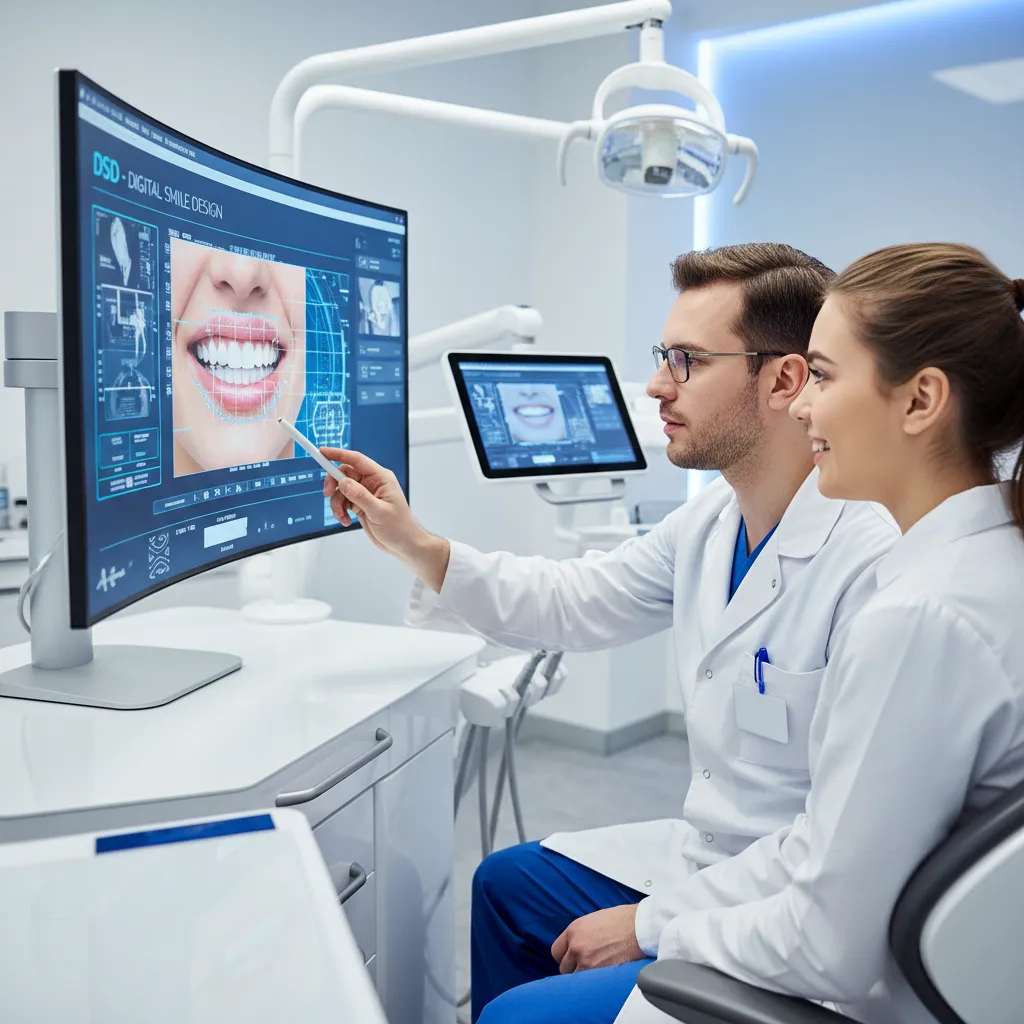
Digital Smile Design (DSD) is a digital planning method that designs your new smile on screen - using photos, videos and 3D scans of your face - so you can preview and approve the result before any tooth is treated. In Side, a smile makeover is quoted per case after your digital preview, and treatment takes 5‑7 days.
Few things change the way you look - and the way you feel about yourself - as dramatically as your smile. Yet for decades, aesthetic dentistry worked partly on guesswork: patients chose a treatment, sat through weeks of work and only saw the final result when it was already cemented in place. Smile design, and in particular Digital Smile Design (DSD) technology, has turned that process on its head. Today you can see a realistic preview of your new smile, test it in your own mouth and approve every detail before a single tooth is permanently treated.
At our clinic in Side, Antalya, Dt. Mustafa Yunusoğlu has been using digital smile design as the planning backbone of every smile makeover since the clinic opened in 2015. This guide explains exactly what smile design is, how DSD technology works step by step, which treatments it combines, who it suits, how long you need to stay in Turkey and what it costs compared with the UK and Germany.
In short: Smile design is a personalised aesthetic dental plan that matches your teeth to your facial anatomy, lip line and proportions. Digital Smile Design (DSD) is the technology behind it: photos and videos of your face are analysed digitally, a simulation is created, and you preview the result as a mock-up before treatment begins.
What Is Smile Design?
Smile design is a personalised aesthetic approach that considers facial anatomy, lip structure and tooth proportions to create a custom smile. It addresses not just the teeth in isolation but the overall harmony of your face. Two patients with identical dental problems can end up with completely different treatment plans, because the ideal tooth shape, length and shade depend on face shape, skin tone, gender, age and even personality.
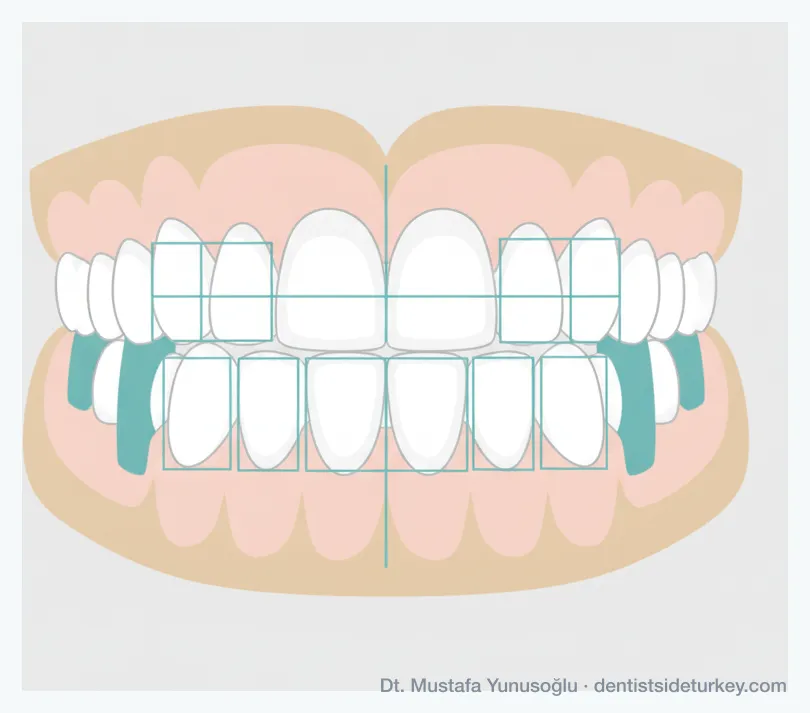
A well-designed smile respects a handful of measurable principles: the curve of the upper teeth should follow the lower lip line, the midline of the front teeth should align with the centre of the face, the proportions between the front teeth should approximate the so-called golden ratio, and the amount of gum shown when smiling should stay within a natural range. Smile design is the discipline of measuring all of these values for your face and then engineering the dental work to match them.
How DSD Technology Works
Digital Smile Design creates a digital simulation of your new smile before treatment begins. Instead of relying on the dentist's eye alone, DSD turns smile planning into a documented, measurable and - most importantly - previewable process. It works in three stages.
1. Photos, Videos and 3D Scanning
The process starts with a structured photo and video session. We capture your face at rest, while speaking and while laughing naturally, because a smile in motion reveals far more than a posed photograph. A 3D intraoral scan records the exact geometry of your teeth and gums. From this data the software analyses your facial features, lip-to-tooth ratios and golden proportions.
2. Digital Design
Using the photographs and the 3D scan, the new smile is designed tooth by tooth on screen. Length, width, shape, symmetry, incisal edge position and gum line are adjusted until the design harmonises with your facial reference lines. At this stage you can already see a realistic image of your future smile - and request changes. Prefer slightly softer, rounder edges? A brighter or a more natural shade? This is the moment to say so, while everything is still pixels rather than porcelain.
3. Mock-up: Trying the Smile in Your Mouth
The approved digital design is converted into a physical mock-up - a thin temporary overlay placed on your own teeth without drilling or anaesthesia. You look in the mirror, speak, smile and take photos with your actual new smile. Only after you approve the mock-up does the permanent work begin. This is what makes DSD fundamentally different from traditional aesthetic dentistry: nothing irreversible happens before you have seen and tested the result.
Which Treatments Can Smile Design Combine?
Smile design is a plan, not a single procedure. Depending on your starting point, the final smile may be built from one treatment or a combination of several:
- Porcelain laminate veneers - ultra-thin ceramic shells that correct shape, colour and minor alignment issues with minimal drilling. See our dental veneers page and veneers cost guide for details.
- Zirconia crowns - full-coverage restorations for heavily damaged, root-canal-treated or badly discoloured teeth.
- Professional teeth whitening - often used on the lower teeth or as a stand-alone refresh when the tooth shape is already good.
- Gum contouring - reshaping the gum line to fix a "gummy" smile or uneven gum heights, usually done with a soft-tissue laser.
- Orthodontic correction - if teeth are significantly rotated or crowded, short pre-alignment can reduce how much tooth material needs to be removed later.
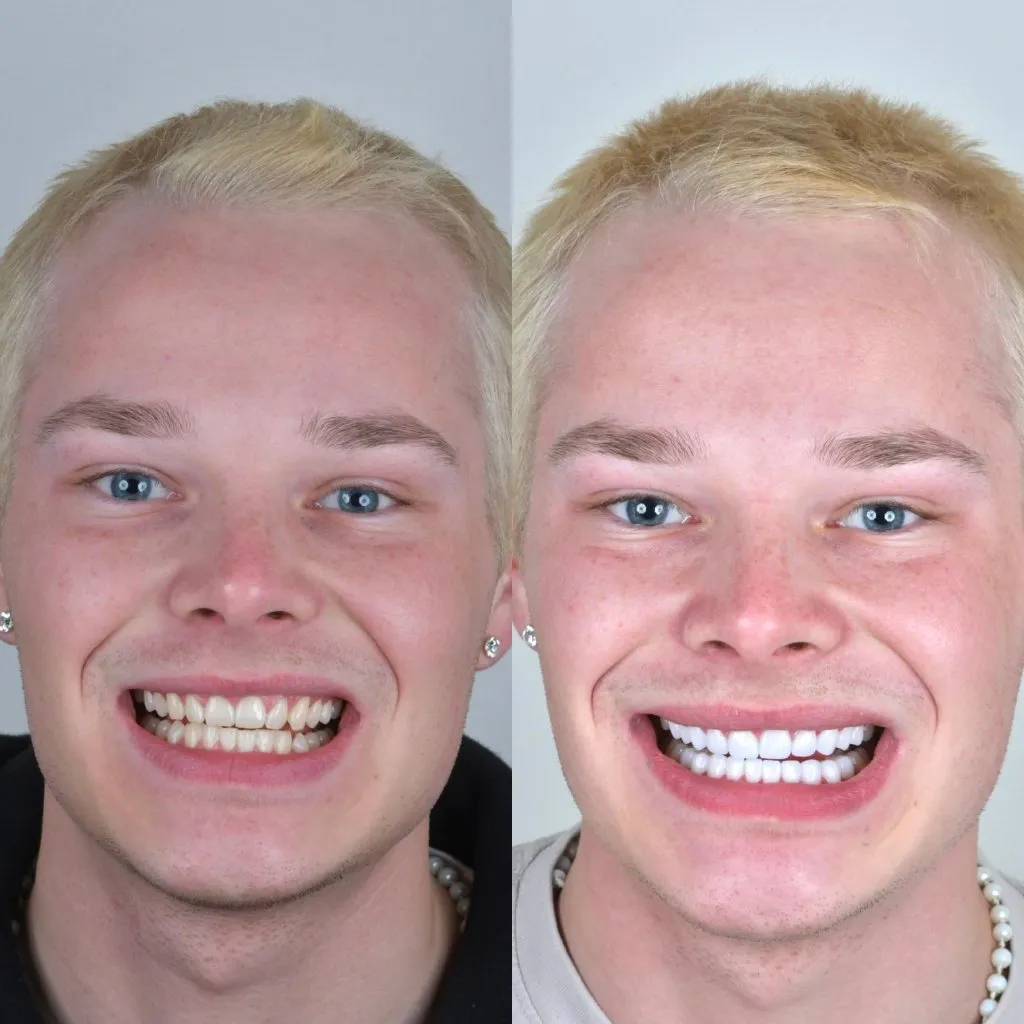
The DSD workflow decides which combination gives the best result with the least intervention. A common outcome, for example, is eight to ten veneers on the upper teeth, whitening on the lowers and minor gum contouring - a plan that would be hard to visualise without a digital preview.
Who Is a Good Candidate?
Smile design suits almost any adult with healthy or treatable teeth and gums. Typical candidates include people who:
- are unhappy with the shape, size or length of their teeth,
- have gaps, minor crowding or asymmetry between the front teeth,
- have discoloured teeth that no longer respond to whitening,
- have chipped, cracked or worn teeth,
- show too much or too little gum when smiling,
- simply feel self-conscious about smiling in photos.
Active gum disease, untreated decay and severe bite problems must be addressed first - a beautiful smile built on an unhealthy foundation does not last. Heavy grinding (bruxism) is not a contraindication, but it changes material choices and usually means a night guard afterwards. All of this is assessed during the initial examination.
The Treatment Process Step by Step
- Facial and dental analysis - photographs, videos and 3D scanning of your face and teeth, plus a full clinical examination and X-ray review.
- DSD simulation - the digital preview of your new smile is created and refined together with you.
- Mock-up trial - the design is tried in your mouth as a temporary overlay; adjustments are made until you are completely happy.
- Preparation and temporaries - teeth are gently prepared under local anaesthesia and protected with quality temporaries while the final restorations are milled and layered in the lab.
- Try-in and bonding - the finished veneers or crowns are checked for fit, shade and bite, then permanently bonded.
- Final polish and photos - occlusion is fine-tuned, the surfaces are polished, and your before-and-after documentation is completed.
Healing and Aftercare
Recovery after smile design treatment is mild. Some sensitivity to hot and cold is normal for a few days after preparation and again briefly after bonding; it fades on its own. Gums may feel tender for two to three days if contouring was performed. You can eat normally the same day - we simply advise avoiding very hard foods, strong coffee, red wine and smoking for the first 48 hours while the bonding fully matures.
Long-term care is straightforward: brush twice daily, floss carefully along the gum line, attend a check-up and professional cleaning once or twice a year, and wear a night guard if you grind. Porcelain does not stain the way natural enamel does, so your new smile keeps its shade for years. Our crowns and veneers come with a 5-year guarantee, which reflects how predictable the digitally planned workflow has become.
How Many Days Do You Need in Turkey?
A complete smile design treatment in Side typically takes 5 to 7 days. A realistic schedule looks like this: examination, scans and DSD records on day one; digital design review and mock-up on day two; tooth preparation and temporaries on day three; lab fabrication during days four and five - which you are free to spend on the beach or exploring the ancient ruins of Side; try-in and bonding on day six; final check on day seven.
Most of our international patients combine treatment with a holiday on the Antalya coast. If you would like help planning flights, hotels and transfers, our dental tourism page explains how we organise the whole journey, including help with airport pick-up and clinic transfers.
The day count for every treatment, side by side, is on our how many days do you need in Side for dental treatment page.
What Decides the Cost of Smile Design
Every smile design is quoted for the case, because the plan can range from whitening and a few bonded edges to a full set of veneers and crowns. The amount depends on how many teeth are treated, the material mix (E-max, zirconia, composite), whether the remaining teeth are whitened and whether the gum line needs contouring. The digital preview is part of the planning.
After your online assessment you receive a fixed written quote within 24 hours of your photos, so there are no surprises on arrival. Our page on how we quote explains how quotes are built, and the treatment page is smile makeover in Side, Antalya.
Ready to See Your New Smile Before Treatment?
The greatest advantage of DSD is certainty: you approve your smile before we touch a single tooth. Dt. Mustafa Yunusoğlu starts with a DSD analysis - send us a few photos via WhatsApp at +90 530 575 47 18 or use our contact page, and we will show you what is possible for your smile, together with a clear treatment plan and fixed price.
Frequently Asked Questions
What is Digital Smile Design (DSD)?
DSD is a digital planning method that analyses photos, videos and 3D scans of your face and teeth to design a new smile on screen. You preview the result as a realistic simulation and an in-mouth mock-up before any permanent treatment starts.
Can I really see my new smile before treatment begins?
Yes. First you review the digital simulation on screen, then a temporary mock-up is placed over your own teeth so you can smile, speak and take photos with the new design. Permanent work only starts after you approve it.
How long does smile design treatment take in Turkey?
Typically 5 to 7 days in total: records and digital design at the start, tooth preparation mid-week, lab fabrication for two to three days, then try-in, bonding and a final check. Many patients combine it with a holiday in Side or Antalya.
How is the cost of smile design worked out?
In Side, smile design and a full smile makeover package are quoted per case after your digital preview. The amount depends on how many teeth are treated and which materials are combined. Your exact figure comes in a written plan within 24 hours.
Is smile design painful?
No. Tooth preparation is done under local anaesthesia, and the mock-up stage involves no drilling at all. Afterwards you may notice mild sensitivity to hot and cold for a few days, which settles on its own without medication in most cases.
How long do the results of a smile design last?
With good oral hygiene and regular check-ups, porcelain veneers typically last 10‑15 years and zirconia crowns 15 years or more. Our clinic backs the work with a 5-year guarantee on crowns and veneers; a night guard is recommended if you grind your teeth.